Monday, 12 August 2013

Interrogating David Staniforth

I have the pleasure to be the first person to put fantasy writer David Staniforth under the spotlight


How do you strike the balance between writing something you want to write and writing something that people want to read, in terms of the compromises you make, if any?

Compromise?

Never!

I've always felt that I should only ever write about what interests me, and write it in a way that interests me. In other words I only write something that I would enjoy reading myself. I’m in no way unique, so hopefully if I enjoy what I’ve written, there will be others out there with similar tastes to me who will also enjoy what I’ve written.

So far I have published three books, all of them fantasy. I am presently writing the third book of my fantasy trilogy “Fuel to the Fire”. I don’t think fantasy is the easiest of genres to sell: when asked what I write, people often roll their eyes and state that they can’t read anything that’s far-fetched (I’ve not read any Mills & Boon, but I have read some unbelievable M&B titles that stretch the boundaries of credibility much further than my fantasy novels).

To my mind all fiction is fantasy, anyway. I enjoy reading it, and I enjoy writing it. If I was prepared to make any compromise, I would have made it straight away and written a different, more popular, less eye-rolly, genre.

Besides, you can't please everyone, as we all have different tastes. My “Fuel to the Fire” book is loved by some with comments of "amazing 5*", while others say "it was an OK 3*". Trying to please others would therefore pull me in too many directions and I’d end up looking like Mr Tickle.


What excites, attracts or appeals to you about the genre(s) you write in?

When I write I like to escape completely. I’m in charge, and I want to make up the rules. Nothing allows this more than fantasy. If I want to have a dragon that’s no larger than a humming bird, that collects nectar and pollinates flowers, I’ll have one, thank you. If I want to play with the laws of physics and chemistry (and I do) I will. What makes this really interesting is creating a situation or world in which it can happen. If you create a rule of nature, you have to be faithful to that rule. The characters have to be as believable as in any other genre, and also be true to those rules. To break those rules would be a cop-out. As a writer of fantasy, then, one is polemically free to go where one wants and yet be equally constrained at the same time. It can be immensely frustrating, but simultaneously great fun.


Do you have a box, drawer, folder etc where you keep thoughts and ideas for future stories? Such as names you have come across, bits of dialogue, ideas, characters - even if you have no idea when you might use them?

I have a journal in which I keep notes on plot ideas for existing stories or ideas for new stories. As I have several stories on the go at the same time I generally know where they will be used. If writer’s block hits, I often delve into one of the other stories and use the ideas while they’re fresh. I also keep a box of index cards on which I write different ways of describing something. If I’m writing about someone crying, for example, I might come up with several ways of describing it. One of them will inevitably be preferable, but the others are likely to be worthy of being used elsewhere. They get written on an index card. In the future, if I need to describe how someone is crying, if nothing immediately springs to mind, out comes the index card.


How do you manage plot bunnies (ideas that invade your mind that aren’t usually helpful to the story you’re writing but breed like...er...bunnies)?

On reading the first few words, I immediately thought of Glenn Close, and thought: don’t antagonise crazy women.

Can’t say this has ever been a problem. I get so absorbed in my writing that it’s like I’m roaming the invented world with the characters, seeing what they’re seeing, smelling what they are, etc. Perhaps for this reason, anything that has unexpectedly sprung to mind has always fitted in with the story.


How much of you is in your characters? Which of your characters is the you that you’d most like to be? Or be with ?

Reviewers have said some of my nastiest characters have made their blood boil, made them recoil in disgust and physically shudder. The good and the bad characters are an invention of my mind and so, as much as I’d like to distance myself from them, they must have an element of me in them. The really horrible traits, however, are taken from people I’ve come across over the years. The character I’d most like to be, or be with, is without a doubt Bane from “Alloria”. You’ll have to read the book to find out why.


Do you become so wrapped up in your writing that your spouse wonders if they're married to you or one of your characters?

I don’t walk around talking or acting like one of my characters, as in method acting. But I have often drifted off in thought, mid conversation, if a plot twist or bit of dialogue has come to mind. So, to an extent, yes, she probably thinks she’s married to several characters.

Actually, she probably thought that even before you started writing. *What? Who said that?*


What type of book do you like reading? Is it the same genre as you write?

I’ll read any genre, as long as I like the writing style and the characters are interesting and well fleshed out. A goodreads’ friend recently posted: “I know I’ve read a good book, if when finished, I know I’m going to miss the characters. I like that and agree with it completely. I like a plot that makes me think, too, and can’t stand being spoon fed by the author. I’ve got my own mind and imagination; leave it some room to work and the story will come alive for me all the more. As mentioned above, so far, I have published only fantasy. The next book to be publish is fantasy. The book after that is a psychological thriller that is already written, and has been sat on my hard drive patiently waiting for a final polish. Perhaps the best part of being an indie author is the freedom to branch out into any genre takes one’s fancy.


What lengths do you go to, to convince us readers that your book has the X factor?

If a singer stood on the X factor stage and didn’t sing, you wouldn’t know if they had the X factor or not. You’d know their name and what they look like. Books are the same: you know what they’re called, and what they look like. Until you read them you won’t know what they sound like. There’s no point me telling readers they have the X factor so I’m not going to try. I’ve written stories to the best of my ability at the time of writing. Hopefully, I’ve produced a cover that is attractive enough, and written a blurb that is intriguing enough to encourage potential readers to at least have a read of the look inside. To continue the metaphor, I guess that’s my audition. Whether it has the X factor or not is for to the reader to decide. If they think it has it, other readers are more likely to believe their opinion than mine. Hopefully, those readers will spread the word.


How do you feel when a reader points out the spelling mistake(s) you have made?

Arrrchgrr! Not another one, surely?

Nobody’s perfect. If a reader is willing to take the time to read my story, and then contact me about it, great, bring it on. If they can help me improve it by pointing out a simple mistake that is easy to correct, as some have, I welcome it.


What do you like most about visiting KUF/GR/forums?

Encouragement, advice, support and entertainment.

Were it not for the goodreads’ UK Kindle forum, and the fantastic people that congregate there, I might easily have published just the one book. For that, I have to give special thanks to Ignite (I hope she doesn’t mind the mention) for finding me on the Amazon MOA forum, for supporting my writing, and encouraging me to join. Since being on there I have met lots of others who are equally as supportive. They know who they are, and they’re incredible.

It goes without saying that a good number of them are crazy!


What is on your near horizon?

I can see some trees, and just beyond that some wind turbines that aren’t moving despite there being wind. OK, I know *groan*.

The final Book of my “Fuel to the Fire” trilogy will be published soon, likely late Autumn. The psychological thriller shouldn’t be too far behind.


Where can we find you for more information?

I haven’t got a website as yet, though I know I should. So the best place is on Goodreads. Go to the UK Kindle group, find my author’s thread, and say hi.  Or my Amazon author page http://www.amazon.co.uk/David-Staniforth/e/B00AK9K16E/?tag=jookuf-21


:D

Wednesday, 7 August 2013

The Scream of Angels by David Haynes

The Scream of Angels is a novel that is delightfully creepy, set in turn of the century Paris in the part of the city where anything goes.  Including Le Grand Guignol's audience when the guts and gore gets too much.

Bishop is an English writer who finds himself writing the darkest theatre he can imagine in a time when life is easily and often snuffed out.

I found this story to be very creepy in it's descriptiveness.  A scene towards the beginning with a saw and a leg made my hackles rise and my shoulders come up.  But in saying that, this story is not like a modern-day serial killer gore-fest.  The mood is dark, the scenes are wonderfully set and you can almost taste the absinthe and laudanam and madness.

I really enjoyed this story.  Again, the author has taken me to another time and place and thrown me right into the middle of it.

http://www.amazon.co.uk/dp/B00ECC4BD4/?tag=jookuf-21


Monday, 29 July 2013

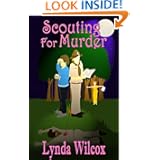
Scouting for Murder by Lynda Wilcox

This is the next instalment of Verity Long's murderous adventures.  In saying that, you don't need to have read her previous outings, any filling in of characters is quickly done.  If you have read the previous stories, you will feel at home in Verity's world.

This story takes her into the world of Brownies and Scouts, even though she doesn't particularly like children, she's the "love them and leave them quickly" type of woman, a bit like me, lol.

The story flows along quite nicely.  I didn't bother trying to guess who the murderer might have been until some way through the story as my guess would chop and change many times as more information comes to light.  Oftentimes I'd shout at Verity to go and talk to the Inspector, the mystery would be solved quicker, but of course, that would make a short and boring story.  I do think Verity drinks an awful lot, she's always cracking open a bottle of wine or going to visit her lovely mates at the Wine Bar,

Again, a very enjoyable easy read.

http://www.amazon.co.uk/dp/B00E631HXQ/?tag=joookuf-21


Sunday, 28 July 2013

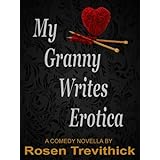
My Granny Writes Erotica by Rosen Trevithick

As soon as I saw this book was available I had to have it. 

Finding herself in debt, Betty needs money and fast.  She's written the best book she ever could, but nobody wants that.  So she decides to cash in on the new craze, but has no idea about anything much more than missionary or doggy.

I think I read most of this with a smile on my face.  I read it in one sitting, it's not long, a nice novella length and my only complaint is I could have read more and more of it.

This is certainly not for children, but the adult stuff is tongue in cheek.  It was a very enjoyable read


Wednesday, 24 July 2013

Interrogating Philip Whiteland

If you want to know anything more about my next subject, read one of his books, they are all about him.


How do you strike the balance between writing something you want to write and writing something that people want to read, in terms of the compromises you make, if any?

I mostly write non-fiction stories about growing up in the 1950s and 1960s.  This wasn’t what I intended to do.  My original aim was to write humorous fiction but I couldn’t interest anyone in that.  However, I wrote a piece for a local competition about a playing field we used to use as children (“The Wreck”) and, although it didn’t win it (or even get placed) it was included in the anthology of stories that was published.  This encouraged me to write similar stories in the same vein for our local newspaper’s nostalgia supplement, and I’ve been doing the same ever since.  So you could say that I’ve been steered into writing what people want to read, and it turns out that I’m not bad at it.  I think my original hope was that the world would read my ‘nostalgedy’ pieces (what happens when you combine nostalgia with comedy) and say “Wow, this bloke can write, we should encourage him to write fiction”, but of course it doesn’t work like that.  I’m glad people like what I write and it’s great to have the opportunity to grow an audience, which I never thought would ever happen.


What excites, attracts or appeals to you about the genre(s) you write in.

I find it relatively easy to write about my childhood because I’ve discovered that I have a fund of stories to tell.  In fact, I often start to write about one thing and find that the action of doing so generates further memories that I had completely forgotten about.  Putting myself back into the situations and reliving the feelings, sensations and atmosphere is something I’ve become quite adept at achieving.


Do you have a box, drawer, folder etc where you keep thoughts and ideas for future stories? Such as names you have come across, bits of dialogue, ideas, characters - even if you have no idea when you might use them?

I know that I should do this, and I have tried carrying a notebook around with me so that I can capture any stray ideas or memories, but I tend to forget to do it (blame it on my age).  If I have a particular idea, I usually just keep churning it over in my mind until I’ve got something roughly shaped out that I can transfer to paper (or hard disk, I suppose) at some point.  I tend to have these really good ideas just as I’m going to sleep (no, nothing like that, I mean story ideas), and always say that I’ll remember them when I wake up, but I don’t.


How do you manage plot bunnies (ideas that invade your mind that aren’t usually helpful to the story you’re writing but breed like...er...bunnies)?

I love the idea of ‘plot bunnies’!  In all honesty, I tend to follow any stray ideas and see where they lead me.  This makes for a somewhat discursive style, but I like it that way.  My one and only (to date) excursion into full-length fiction (‘Jambalaya’) was written in entirely the wrong manner in that I wrote it in the same way that you would read it.  I simply started at the beginning and then followed the story wherever it took me, cracking jokes along the way.  I know that isn’t how it’s supposed to be done.  So, I guess the bottom line is that I don’t manage the ‘bunnies’, they manage me!


How much of you is in your characters? Which of your characters is the you that you’d most like to be? Or be with ?

I don’t have characters as such.  As all of the stories are about me growing up, then I couldn’t identify with the main character any more than I do.  Mind you, I wouldn’t mind going back and doing it all again with the benefit of hindsight.


Do you become so wrapped up in your writing that your spouse wonders if they're married to you or one of your characters?

Oh yes.  That business of churning a story around in my mind for days on end does tend to make me a little distanced from reality at times.


What type of book do you like reading? Is it the same genre as you write?

I read an awful lot of humour, particularly humorous essays by the likes of Bill Bryson, Alan Coren and Stuart Maconie.  I’m also trying to collect all the books of P.G. Wodehouse.  However, since I’ve had my Kindle I’ve been developing a more eclectic taste by snapping up free books as they become available.


What lengths do you go to to convince us readers that your book has the X factor?

I don’t think that I do.  I like my readership to grow organically, as one reader recommends something to another.  Having said that, I’m willing to accept overnight success as much as the next person, it just seems to be taking a while.


How do you feel when a reader points out the spelling mistake(s) you have made?

Annoyed, because I should have picked them up myself.  Doesn’t often happen, although I do occasionally have problems with possessive apostrophes.


What do you like most about visiting KUF/GR/forums?

I’ve always been heartened by the amount of support that is offered and the general friendliness.


What is on your near horizon?

I’m toying with the idea of a short compilation of Christmas pieces with a view to helping people get in the right spirit.  If it happens, I’ll be aiming for an October launch.


Where can we find you for more information?

Well, there’s my blog at http://www.philwhiteland.blogspot.co.uk/ or you can find all of my books and a bit about me at my Amazon author page http://www.amazon.co.uk/Philip-Whiteland/e/B004SBQSHG/ref=ntt_athr_dp_pel_1

Friday, 19 July 2013

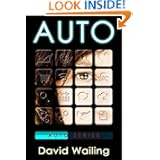
Auto by David Wailing

Auto is the collection of David Wailing's Auto stories into one book but ties them together nicely.

The author has created a future a decade from now, whereby all the social media needs of society is tied into having an "auto" that screens out all the rubbish and automatically replies for you.  The Smart phone has gotten a lot smarter.

I had read the individual stories when they were originally released, but they held up for a second read.  I nearly skipped one to get to a new story, but soon went back to read them in order.  Reading them a second time and in one sitting revealed connections that I'd not noticed when I read them separately.

I may have given some of the individual stories 4 stars previously, but as a whole I feel they are enhanced by being brought together.

In all, a wonderfully scarily potentially accurate future that I'm not sure I want to embrace.

http://www.amazon.co.uk/dp/B00DY1F9VM/?tag=jookuf-21


Thursday, 18 July 2013

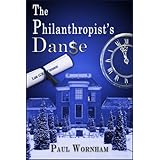
The Philanthropist's Danse by Paul Wornham

A rich man calls together 12 members of family and friends for a week in his house.  They find out he is dead and they must decide amongst themselves how to split his massive fortune.  If they don't sort it out within a day, they lose 20% of it.  And 20% more the next day, etc

This looked a good blurb and the first chapter got me intrigued.  Yes, splitting it 12 ways would be sensible, but the family think they deserve more than the friends and the friends say if the father wanted you to have it, wouldn't he have given it to you.  And so starts the infighting and recriminations and secrets.

I really enjoyed this book.  It perhaps could have done with losing a little in the middle, but in the main, this was gripping and made me want to find out more.  As more is revealed about the characters, your views were changed as to who was nice and who wasn't.  I do recommend this one.

http://www.amazon.co.uk/dp/B0057J4ZMI/?tag=jookuf-21


Tuesday, 16 July 2013

Interrogating Kate Baggott

My next interrogation is with Kate Baggott, author of short stories.


How do you strike the balance between writing something you want to write and writing something that people want to read, in terms of the compromises you make, if any?

When it comes to writing, I don’t compromise. There is enough compromise in my daily life and writing is the one area where I have complete control. I do value and take editorial advice if someone takes the time to give it to me. I work with the same fiction web sites and literary journals again and again so I build relationships with their editorial staff that are really satisfying. 


What excites, attracts or appeals to you about the genre(s) you write in?

I write short stories, but I write in series or collections so I can stay with certain character and their life events for a long time. My goal is to make each piece stand alone while creating an entire society the action revolves around. It is something I studied in school and between Munroe, Atwood, Mowatt and other Canadian writers I have a whole cultural tradition to learn from. 

Short stories are also about time management. I have to earn a living too. Between teaching, journalism and ghost-writing, the time I have to write fiction is short and precious, but also carefully controlled. I can write a perfect moment in the time I have. To write a perfect novel, I would need more time…and perhaps a better capacity for giving up control.


Do you have a box, drawer, folder etc where you keep thoughts and ideas for future stories? Such as names you have come across, bits of dialogue, ideas, characters - even if you have no idea when you might use them?

I’m not very organised in terms of keeping track of ideas. I have lots of them all the time. When I have an idea, I play with it and imagine it and dream it. By the time I sit down, I can usually spill it all out. That doesn’t mean the work is good. I usually get it all out and then go back to it later to see what is there. Some pieces have not been published until 10 years after I wrote them. Some of that is about content and style fashions, but some of it is about not being able to edit and form properly until the story has lived alone for a while.


How do you manage plot bunnies (ideas that invade your mind that aren’t usually helpful to the story you’re writing but breed like...er...bunnies)?

Sometimes, plot points develop on a subconscious level and will be picked up at an essential moment as the writing progresses. You don’t know what you might need until you know exactly what you are doing. My approach is to write out everything all at once and slice and dice later.


How much of you is in your characters? Which of your characters is the you that you’d most like to be? Or be with?

One of my friends claims that all of my characters are me all the time, but I generally don’t re-write my autobiography as fiction.

One of my characters, Finnegan, is a teenage boy and I created him out of regret. When I was a teenager, I would have grown up more easily if I had had a boyfriend like Finnegan. Stories about Finnegan have won awards and readers seem to like him. And yet, I’ve been working on stories about him for years, but I can’t finish the collection because teenagers are kind of tough to live with.

In Love from Planet Wine Cooler, which is available as a collection, things were very much about closing doors on the past. I was Marina, but she is also all the female friends I have been close to since I learned how to make friends. I wanted to write a kind of Generation X for women who grew up like I did in the 90s. We’re not a big group, we’ve been dwarfed demographically by Boomer Women and Millennial Babies, so there is little about the peculiar time and place we came of age in.


Do you become so wrapped up in your writing that your spouse wonders if they're married to you or one of your characters?

To be completely honest, my marriage is a mess and I would be lying if I said my writing was not part of how we got into relationship disaster. But, in dealing with heart-break and stress and constant worry, writing has been my greatest source of comfort. There is no emotional chaos when I sit down and work out the moments that I think create meaning. When I won the America’s Next Author Contest, one of the judges said it was a “quiet, well-crafted” story. Critics said that nothing special happened in Finnegan & Grandfather Cheng. Both, I think, were correct. In my work, I am not looking for or at explosions or murders. Instead, I’m looking for lights coming on and hearts being moved.


What type of book do you like reading? Is it the same genre as you write?

Right now, I’m reading nothing but Alexander McCall Smith. I’ve got an episode from Scotland Street, an instalment of Isabel Dalhousie and a Number One Ladies’ Detective Agency on the go. I think AMS strikes a great balance between literary integrity and popular appeal. I learn a lot about structure and character development from him. On other reading binges, I’ve read everything by John Updike and John Irving. I consider the three of them to be as influential to how I approach writing and the world as every great teacher I’ve had. 


What lengths do you go to to convince us readers that your book has the X factor?

Journals and fiction sites that are run by great editors give me the chance to sing for their metaphoric bar or pub patrons before I have to fill a stadium with book readers. In between those events, I keep humming so my voice stays warm while I wait for an open ear. When I find that, I start at a whisper in the reader’s ear and slowly increase the volume until they are listening to my song and harmonising during their own chorus.

I’m as annoyed by all the indie author marketing noise as everyone else, so I don’t automate “buy my book” tweets or spam people. I just try to be where interested people are. There is also an element of need. An acquaintance recently told me that she read Love From Planet Wine Cooler as her own marriage was ending and that it brought her comfort because it gave her permission to re-think her own history and her own future. Those issues of timing are hugely important. If my work is there when a reader needs me, even if it is only one reader ever, then I have done what an author should do.  


How do you feel when a reader points out the spelling mistake(s) you have made?

I express my thanks for their effort and my deep embarrassment. Sometimes, though, spelling mistakes are an issue of using Canadian spelling rather than UK or US standards. We use colour and flavour instead of color and flavor, and I would never use the words nite or lite over night and light, but we use realize and organize over realise and organise. Since I’ve lived in Europe and worked for US publications, I get as confused over which standard to use when, but my heart is in my Canadian dialect.


What do you like most about visiting KUF/GR/forums?

I mostly lurk to observe how readers approach and choose books to read. Deciding to share the experience of reading the same book is an amazing event. Talking about a movie or a TV program is becoming less commonplace the more fragmented and solitary our viewing habits become. I’m going to be watching very carefully to see how books fill the void.


What is on your near horizon?

In September have a short story coming out in an anthology called Friend. Follow. Text. It’s a collection of stories by various authors inspired by how we use social media. I think it will teach us a lot about what is inspiring writers right now. I’m also working on a series of stories called Dry Stories and pieces from it are just starting to appear online and in journals. I hope to have the series finished by year-end and all the pieces published by the end of 2014. Then, I’ll have them available as a collection in 2015. 


Where can we find you for more information?

Goodreads, Twitter, and Facebook. I love social media. I collect all of my interactive activities together on my web site http://www.katebaggott.com

The Queen of Scots Mystery by Cecilia Peartree

This is the latest instalment from the Pitkirtly gang.

By now, I feel I know this bunch, but as usual, I'm kept on the edge of my seat wondering what's going to happen.  The group of characters gets larger each time as characters introduced in previous books get a bit more than bit parts.

Again, the story revolves around Christopher and as usual, he's a bit clueless as to what's happening.  A murder has taken place and Ameryllis is miffed that she's not around to sort things out. 

I enjoy reading this series as I feel I'm part of the family and again I wasn't disappointed.  This is another cracker of a read.

https://www.amazon.co.uk/dp/B00DPYPD0K/?tag=jookuf-21


Sunday, 14 July 2013

Faust 2.0 by Michael Brookes

This is the story of an evil entity coming into being and taking over the internet.   This being likes to work its way into vulnerable people's lives by promising them what they want in return for "just one favour"

This story is a mix of high tech and creepiness.   I could imagine this being played out on the screen as the descriptions of the characters and scenes were very well written.  I enjoyed this book very much indeed.

http://www.amazon.co.uk/dp/B00CTA3YIE/?tag=jookuf-21


Sunday, 30 June 2013

Broken Cats and Cowboy Hats by Roger Knowles

This was quite a depressing read.  Mark's life was hard from when he was born and he never know love, so never learned how to be even nice.

The story starts off part history, part present so we learn where Mark's character develops.  This is an ugly story.  Mark is once of the nastiest people I've ever read.  I wouldn't say that reading the first part of the book was enjoyable, but I needed to read on.

The second part is where the story ramps up and gets tense.  I think I enjoyed this bit more.  

Another enjoyable story from Roger Knowles :)

http://www.amazon.co.uk/dp/B00515LOKO/?tag=jookuf-21

The List by J.A. Konrath

A man is found dead and he has a number tattooed on the sole of his foot.  The investigating officer also has a similar tattoo, but a different number.  They are on the list, but what is this list of?

This is the first Konrath book I have read and I was impressed.  This is a tight thriller, with plenty of chase action and "will they get there in time" scenes.  The reason for the tattoos is a bit far out there, but is in interesting idea.

I found this to be an actin packed story, with very little down-time.  Very enjoyable indeed.

http://www.amazon.co.uk/dp/B00267T89E/?tag=jookuf-21


Sunday, 23 June 2013

Beyond Eclectic by Jonathan Hill

Beyond Eclectic is another series of short stories by Jonathan Hill and yes, Maureen's back.
Generally, there's usually one story in an anthology that I just can't read, but all the ones in this one were readable and enjoyable.

I really liked the one about the 60 year old couple who just don't talk to each other and I also liked the Lollipop Man and of course Maureen.

I'm pretty sure Maureen's presence is stretching to this review as the formatting just won't behave.

http://www.amazon.co.uk/dp/B00CQRUM62/?tag=jookuf-21

Troubleshooter by Dakota Franklin

Troubleshooter is the third in the Ruthless to Win series of books set around Armitage motor racing company.  All the books in this series are first person POV of one of the characters, so you kind of get to know everyone bit by bit.

This story is Charlie Cartwright's.  Charlie is Armitage's troubleshooter and the trouble he needs to shoot in this story is the team's Formula 1 driver, who is a bit of a party animal and cocaine smuggler.

Charlie meets his soul mate at the start of this story and being in love does somewhat distract him.  But as with the other books, everyone is superb at their jobs, they have massive expense accounts and work all the hours under the sun.

Even though this is set in a man's world, as a female reader, I didn't find it too technical or too "mannish".  The jet-setting and behind the scenes at races were interesting enough, but not too detailed as to put me off.  It was a good adventure.

http://www.amazon.co.uk/dp/B008U5MZ32/?tag=jookuf-21


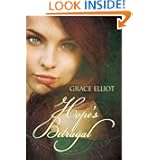
Hope's Betrayal by Grace Elliot

This is a regency romance and very much the men are men and the women are looked down on, but lusted after.

The story is set around smuggling and Captain Huntley captures a smuggler, but finds out it is a girl, but of lusting after age.  This is another story about the Huntley boys.  I didn't realise this for a long time until Eulogy comes to visit.

Being a woman of the 21st century, there's a lot that I don't like about the women of those times, but I suppose it's the mark of a good storyteller that these feelings are brought forward.

Regency romance is not my genre at all, but Grace Elliot is a great storyteller and I do get dragged into the times and the story.

http://www.amazon.co.uk/dp/B0084ND8ZY/?tag=jookuf-21


Wednesday, 19 June 2013

Interrogating David Haynes

Here’s Mr Macabre, himself.


How do you strike the balance between writing something you want to write and writing something that people want to read, in terms of the compromises you make, if any?

That’s quite a tough one. Essentially I write stories that I enjoy writing! Up until the last couple of books I never really considered whether people would actually want to read them. I was just pretty pleased to have finally completed them!
However when I started getting sales and then reviews, it was such an incredible feeling I wanted more! And in order to get more I needed to write stories that people would actually want to read.
At the moment I’m still writing stories I enjoy and fortunately some people have enjoyed them so I haven’t had to make any compromises, yet!


What excites, attracts or appeals to you about the genre(s) you write in.

I’ve mixed up my genres a fair bit really, but I think that’s one of the beauties of being an indie. At the moment I’m enjoying my trip down the dark and twisted path of horror. I ‘m not one for masses of blood and gore, although they can be used constructively and powerfully if done right. I prefer to read, creepy, unsettling stories where you feel uneasy with what’s happening. I’m trying to capture some of that feeling with my current stories but obviously I’m still learning. They say humour is a very personal thing and difficult to write well. I think to a similar extent, horror is the same.


Do you have a box, drawer, folder etc where you keep thoughts and ideas for future stories? Such as names you have come across, bits of dialogue, ideas, characters - even if you have no idea when you might use them?

Absolutely! I have a little Nexus7 and it’s on most of the time. So when I’m watching tv or trying to go to sleep, if an idea pops up I just type it quickly onto a document. The problem is now, there are so many documents with just a line or two on, I’m not sure where anything specific is.


How do you manage plot bunnies (ideas that invade your mind that aren’t usually helpful to the story you’re writing but breed like...er...bunnies)?

I'm lucky because generally I don't suffer that affliction and I can manage to stay focused on one thing at a time. I hear about writers having multiple projects running simultaneously and I admire how they can do it


How much of you is in your characters? Which of your characters is the you that you’d most like to be? Or be with?

I don’t want to think about being anywhere near some of my most recent creations!
I really enjoyed all the characters from The Boy Who Kissed the Sky. The violent, drunken magician, Filipe Feret was probably the one who I’d most like to go to the pub with. Although I think we’d get in a few scrapes!
The Boy, George Roberts was probably like me in a lot of ways. I’ve been on a couple of really long road trips where I’ve tried to find something that was never there for finding!


Do you become so wrapped up in your writing that your spouse wonders if they're married to you or one of your characters?

Quite frequently! I tend to wake up very early, before anyone else in the house. In the first few minutes when I’m still waking up I’ll be thinking about my current book and the characters in it. When Mrs H finally wakes up, after I’ve coughed, nudged and sighed enough, I’ll immediately say, “Now, I’ve been thinking about (name of character) do you think he would day this (insert line) or do this (insert horrendous act of terror)” She loves to be woken up like that.


What type of book do you like reading? Is it the same genre as you write?

I read anything, absolutely anything! I’m writing old school horror stories at the moment but I’m not reading any currently. I’ve read an awful lot of the classic horror and ghost stories from the Victorian era and they were my inspiration for the macabre stories. I always try to read a Stephen King book once a year too. They’re not what I’d call horror though, just good stories.
My favourite writer is John Irving, who doesn’t write horror at all. They tend to be epics but also the characters tend to be slightly odd or don’t always think the way considered mainstream. One of the inspirations for The Boy Who Kissed the Sky was John Irving’s stories.


What lengths do you go to to convince us readers that your book has the X factor?

Making a book stand out from the crowd, when the crowd is already pretty damn good is as I’ve found out, extremely difficult. With my current set of books I set out with a deliberate theme – the Victorian Penny Dreadful. I wanted to get the language to be sympathetic to the era and also get the artwork on the cover to fit with that theme. Getting the language right was a case of reading literature from that period (as recommended by Alex Roddie) and doing research about the Victorians obsessions with death, through the internet. Immersing myself in Victoriana was and continues to be, fascinating.
I was pretty pleased with the overall result.


How do you feel when a reader points out the spelling mistake(s) you have made?

That’s fine by me. Obviously I’d prefer not to have any but if you find one, please let me know.


What do you like most about visiting KUF/GR/forums?

As a writer, the forums are invaluable. There's always someone who can give you advice when you ask for it, particularly on the aspects of publishing which I never knew existed until a few months ago.
The forums are also invaluable for interacting with readers. To be able to join in conversations where readers and writers are discussing something is fantastic. We're coming at things from different angles but wanting the same thing - a great book to read.


What is on your near horizon?

I'm working on another horror story although it's also got some mystery/thriller aspects to it too. I suppose most books slip across several genres.
It's set in the late 19th and early 20th century, in Paris. The whole of Europe seem to have been obsessed with things we would find creepy nowadays. Finding inspiration and conducting research has been interesting and occasionally outright disturbing!


Where can we find you for more information?

I have a blog which I set up recently – http://macabrecollection.blogspot.co.uk/
And a more general web page. http://davidhaynesfiction.weebly.com/

But I’m also regularly on both Kindle Users Forum and Goodreads. 

Tuesday, 18 June 2013

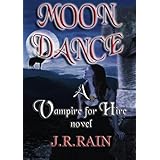
Moon Dance by J.R. Rain

Moon Dance is about a private investigator who happens to be a vampire.   Samantha Moon is a wife and mother and FBI agent, who became a vampire after a brutal attack 6 years ago.

I do have a bit of a problem in those 6 years.  Things happen in this book that I'm sure should have happened years previously.  The story doesn't go into any of her past, just the present.

This is quite a light read.  It doesn't seem to take itself too seriously, although it's not played for laughs.

I wasn't sure how "vampiry" or "other-worldy" this would be but in the main, it's a straight detective story, just with a side of the paranormal.

I did quite enjoy it and would certainly try a bit more.

http://www.amazon.co.uk/dp/B002Q0Y27Y/?tag=jookuf-21


Sunday, 16 June 2013

Famous by Blake Crouch

Lance is a 38 year old, still living with his parents when he loses his job.  But Lance doesn't care as he looks like a Hollywood movie star so takes off to be that star.

This was quite an interesting story.You wonder whether Lance is right in his head as he sets out  to become his idol.  He dresses smart, goes where the smart people go, but is not really sure how he should act.

This sound like it should be a chick-lit type story, but it's not.  It is told seriously and gets quite serious too.

I really enjoyed this story.  I wasn't sure where it was going and Lance surprised me a few times along the way.  It is a very readable story and I didn't want to put it down.

My only complaint is that the story finished at 80%.  I'll forgive the author a little, as it went into an interview with him, but I really hate having a big chunk of a kindle book set aside for adverts and chapters of other books.  I don't read them and get miffed that I've not had at least 95% of the kindle book.

http://www.amazon.co.uk/dp/B003HNNHZ2/?tag=jookuf-21